Kada ulažete u stvaranje izvrsne obuke, pravi izazov nije izrada tečajeva, nego njihovo promoviranje kako bi zaposlenici znali zašto, kada i kako ih pohađati. U eri kad je digitalni umor na vrhuncu, vaša interna marketinška strategija određuje hoće li vaš kurikulum postati kamen temeljac rasta ili zaboravljena poveznica u pretincu e-pošte. Ovaj vodič pretvara interne komunikacije u pokretač usvajanja, pomažući vam poboljšati angažman zaposlenika u obuci, povećati stope završetka i dokazati povrat ulaganja u učenje.
Moderno radno mjesto je bojište za pažnju. Prema nedavnim istraživanjima Gartner, Prosječan zaposlenik danas se suočava s konstantnim “zamorom od promjena”, zbog čega je manje sklon sudjelovati u novim inicijativama osim ako vrijednost nije odmah očita. Uspješno promicanje tečajeva zahtijeva promjenu načina razmišljanja od “obveznog zahtjeva” prema “pristupu vođenom vrijednostima” koji zaposlenike tretira kao kupce vlastitog profesionalnog razvoja.
Pročitajte trendove u obuci zaposlenika 2026.
Zašto interni tečajevi ne uspijevaju pridobiti na popularnosti—čak i kad je sadržaj solidan?
Niska uključenost rijetko znači loš sadržaj; obično je riječ o neuspjehu u vidljivosti i percipiranoj relevantnosti. Kad se L&D timovi usredotoče isključivo na pedagošku kvalitetu tečaja, često zanemaruju korisničko iskustvo (UX) i psihološke poticaje koji potiču sudjelovanje. Bez strateškog plana za promociju tečajeva, čak i najtransformativniji materijali za obuku nakupit će digitalnu prašinu u vašem sustavu za upravljanje učenjem (LMS).
Istraživanje iz LinkedInov izvještaj o učenju na radnom mjestu Dosljedno ističe da je “nedostatak vremena” glavna prepreka u učenju. Međutim, vrijeme je često mjera prioriteta. Ako zaposlenik ne razumije kako tečaj rješava određeni problem ili mu pomaže ostvariti karijerni cilj, prirodno će dati prednost svojoj neposrednoj listi zadataka. Da biste promijenili ponašanje, morate promociju internog učenja tretirati kao lansiranje proizvoda visokog uloga – s više kanala, usmjereno na prednosti i pojačano od strane vodstva.
Koje su glavne prepreke angažmanu zaposlenika u obuci?
Prije nego što ovladate umijećem promoviranja tečajeva, morate identificirati “točke trenja” koje sprječavaju zaposlenike da kliknu na ‘Počni’. Ti blokatori su često nevidljivi administratorima za učenje i razvoj, ali krajnjem korisniku djeluju kao zidovi od opeke.
- Natjecanje za pažnjuLjudi daju prednost poslu koji njihov menadžer nadzire i nagrađuje. Ako se neki tečaj ne spomene na 1:1 sastancima, on ne postoji.
- Niska percipirana relevantnostOpćenito poručivanje propušta nijanse uloge, razine i lokacije. Prodavač ne želi isti “Uvod u softver” kao programer.
- Trzanje pri pristupu: Ponovno postavljanje lozinki, zbunjujuća navigacija u LMS-u i dugi moduli. Svaki potreban klik predstavlja pad potencijalnog angažmana od 20%.
- Nema povratne petljeUčenici ne vide napredak niti kako učenje poboljšava njihove ciljeve. Bez faktora “Što je u tome za mene?” (WIIFM), motivacija slabi.
- Loše tempiranjePokretanje obaveznog tečaja o usklađenosti tijekom prodajne akcije na kraju tromjesečja recept je za ogorčenost.
Antidot za ove blokatore uključuje jasno postavljanje, podršku vodstva, neometan pristup i stalne poticaje vezane uz poslovne rezultate. Za dublji uvid u pojednostavljenje vaše implementacije pogledajte naš Strategije usvajanja LMS-a: plan uvođenja za 30-60-90 dana.
Koji interni komunikacijski kanali zapravo donose rezultate pri promociji tečajeva?
Oslanjanje na jednu masovnu e-mail pošiljku nije promoviranje tečajeva—to je samo sanjarenje. U ekonomiji pažnje vaša poruka mora biti tamo gdje vaši zaposlenici već borave. Prema Mekinzija, Organizacije koje koriste raznolike, društvene i mobilne kanale bilježe znatno veće stope usvajanja inicijativa digitalne transformacije.
Koristite mješavinu kanala i prilagodite poruku trenutku kako biste osigurali da vaš kurikulum ostane u središtu pažnje, a da pritom ne postane dosadna pozadinska buka:
| Kanal | Najbolje za | Kut poruke | Vlasnik |
|---|---|---|---|
| Skupina menadžera | Prioritetno signaliziranje | Zašto je ovo važno za KPI-jeve tima ovog mjeseca | Menadžeri ljudi |
| Zadržavanja putem e-pošte i kalendara | Svijest + zaštita vremena | Tko, što, blok od 30–45 minuta, rok | Ljudski resursi / Učenje i razvoj |
| Objave na Slacku/Teamsu | Poticaji + mikro-ČPP | 1 pogodnost + 1 klik za početak | Vlasnik programa |
| Istranet/LMS baneri | Vječna prometa | Pločice i rokovi temeljeni na ulogama | Komunikacije + učenje i razvoj |
| Digitalni znakovi / QR u prostorijama za odmor | Domet na prvoj liniji | Skenirajte za početak mikroučenja | Operacije/Ljudski resursi |
| Napomena izvršnog direktora/potpredsjednika | Kulturni mandat | Strateško zašto + prepoznavanje | Vođstvo |
Dokazi su u skladu s bihevioralnom znanošću: ponovljeni, raznovrsni poticaji smanjuju trenje i povećavaju akciju. Pogledajte smjernice od Nielsen Norman Group o intranetnoj komunikaciji i Gallup o tome kako je utjecaj menadžera najvažniji čimbenik u razinama angažmana zaposlenika.
Kako možete osmisliti internu kampanju koja promiče tečajeve i održava angažman?
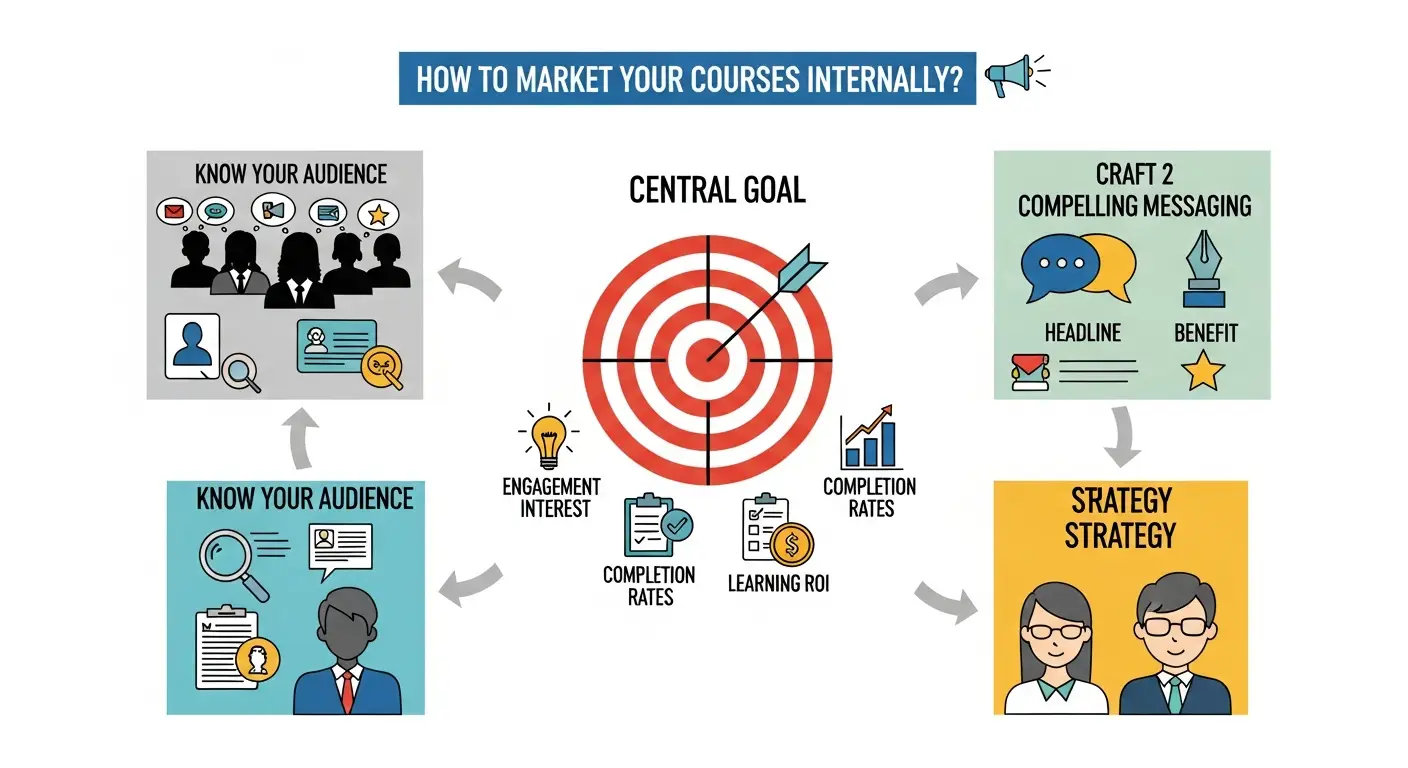
Uspješan interni marketing nije u jednom “velikom prasku” lansiranju; radi se o stvaranju održivog narativa. Koristite ovaj petodijelni priručnik za usvajanje—optimiziran za promociju internog učenja, strategije usvajanja LMS-a i izgradnju kulture učenja koja traje.
1) Osmislite vrijednosnu ponudu koja zaposlenicima zaista znači
Prestani promovirati “što” i počni promovirati “pa što”. Kada promičeš tečajeve, tvoja poruka treba biti usmjerena na opipljive koristi koje će polaznik dobiti. Hoće li im ovaj tečaj uštedjeti sat administrativnog posla tjedno? Hoće li im pomoći da se certificiraju za napredovanje? Koristi jasan, na ishode usmjeren jezik.
- Vodite se rezultatima: “Završite ovo kako biste smanjili eskalacije korisnika za 15%,” a ne “Modul 3 je aktivan.”
- Učinite to osobnim: Povežite obuku s ključnim pokazateljima uspješnosti (KPI) specifičnih uloga, karijernim putevima ili rizicima usklađenosti po funkcijama.
- Drži kratko: 12–18 riječi za naslove poruka; jedan jasan poziv na akciju po poruci.
2) Osigurajte podršku vodstva koja se očituje u kalendarima i individualnim sastancima jedan na jedan.
Ako vodstvo ne da prioritet učenju, ni zaposlenici neće. A SHRM Studija je otkrila da kada rukovoditelji aktivno sudjeluju u obuci, stope završetka porastu za više od 60%. Vođe ne moraju biti autori tečajeva—oni moraju biti organizatori tečaja.
- Alati za menadžera: Osigurajte menadžerima tri ključne teme za razgovor, scenarij za 60-sekundno pozivanje imenom i nadzorni panel za praćenje napretka njihovog tima.
- Vremensko ograničavanjeZamolite voditelje da u kalendarima tima zakažu “Sate učenja” tijekom razdoblja slabog opsega.
- Javno priznanjeNa sastancima za sve pohvalite timove koji su najviše primijenili nove vještine.
3) Smanjite trenje do prvog klika
Prilikom promicanja tečajeva “putovanje korisnika” mora biti besprijekorno. Ako zaposlenik mora dva puta prijavljivati se ili pretraživati natrpan izbornik, izgubili ste ga. Visoko uspješni L&D timovi koriste “duboke poveznice” koje zaobilaze početnu stranicu LMS-a i dovode polaznika izravno u lekciju. Ovo je osobito ključno za strategije mikroučenja. Saznajte više u Naš vodič kroz primjere mikroučenja koji povećavaju usklađenost.
- Duboke poveznice jednim klikom izravno na početnu stranicu tečaja unutar vašeg LMS-a.
- SSO/automatska prijavaKoristite jedinstveno prijavljivanje kako biste uklonili prepreke lozinki; dodajte QR kodove za terenske radnike u pokretu.
- Format mikro-učenjaKratki intervali od 5–8 minuta nadmašuju 45-minutne blokove za početni zamah.
4) Mudro gamificirajte—i povežite poticaje s značajnim ishodima
Gamifikacija nije samo o bodovima; radi se o društvenom dokazu i vizualizaciji napretka. Prema ATD, gamifikacija povećava motivaciju učenika zadiranjem u prirodnu ljudsku želju za postignućem i statusom.
- Bodovi + razine za pravovremeno dovršavanje i savladavanje kvizova, a ne samo za “prazna” prijavljivanja.
- Timski natjecanja s malim, vidljivim nagradama (digitalne značke, ljestvice) i tromjesečnim nagradnim igrama.
- “Izazovi ”Primijeni to"Zadatak nakon tečaja s odobrenjem menadžera trebao bi donositi dvostruke bodove ili certifikat.
5) Personalizirajte putove učenja i podsjetnike
Masovni marketing je mrtav; segmentiranje je budućnost. Učinkovito promoviranje tečajeva znači slanje pravog poticaja pravoj osobi u pravo vrijeme. Koristite podatke iz LMS-a za automatizaciju tih poticaja na temelju ponašanja.
- Segmenti publikeGrupirajte po ulozi, lokaciji, trajanju i čak profilu rizika za module usklađenosti.
- Adaptivno sekvenciranjeKoristite pretestove kako biste iskusnim zaposlenicima omogućili da preskoče poznati sadržaj i usredotoče se samo na ono što im je potrebno.
- Kadenca poticajaKoristite “kapljevitu” kampanju: Dan 0 (pokretanje), Dan 3 (podsjetnik), Dan 7 (obavijest menadžeru), Dan 14 (krajnji rok).
Kako vam Smart Arena pomaže promovirati tečajeve i brže dokazati ROI?
Smart Arena kombinira AI-om pokretan alat za izradu tečajeva (CourslyAI) s LMS-om spremnim za poduzeća kako bi promocija tečajeva — i održavanje usvajanja LMS-a — bila znatno jednostavnija. Izrađen je za višejezične radne snage, okruženja s visokim zahtjevima za usklađenost i timove kojima su rezultati potrebni brzo. Automatskim obavljanjem najzahtjevnijih zadataka promocije Smart Arena omogućuje voditeljima odjela za učenje i razvoj da se usredotoče na strategiju umjesto na administraciju. Da biste razumjeli tehnologiju koja stoji iza toga, pročitajte Naš vodič kroz prednosti LMS-a pokretanog umjetnom inteligencijom.
Unutarnja komunikacija, automatizirana
- Automatska prijava + duboke poveznice Postavite učenike izravno u odgovarajući modul putem e-pošte ili Slack obavijesti.
- Segmentirane objave Obavijesti putem e-pošte, Slacka/Teams-a i banera u LMS-u osiguravaju da nitko ne dobiva nevažne obavijesti.
- Upravljačke nadzorne ploče Pružite na prvi pogled statistiku dovršenosti i podsjetnike za “zakašnjele zadatke” jednim klikom za svoje izravne podređene.
Personalizirane staze učenja bez opterećujuće administracije
- CourslyAI pretvara SOP-ove, PDF-ove i prezentacije u mikro-učenje temeljeno na ulogama u roku od nekoliko minuta, održavajući sadržaj svježim i relevantnim.
- Preliminarne procjene Usmjeriti učenike na ono što im je potrebno; nema gubljenja vremena na teme koje su već savladali.
- Oznake vještina Usklađivanje obuke izravno s kompetencijama tvrtke i individualnim ciljevima uspješnosti.
Mjerenje uspjeha angažmana pravim metrika
Promoviranje tečajeva je samo pola bitke; također morate dokazati da je bilo uspješno. Smart Arena pruža detaljne analitike koje nadilaze “stopu dovršenosti” kako bi pokazale stvarni poslovni utjecaj. Za širi industrijski kontekst na nadzornim pločama i analitikama usvajanja pogledajte ovaj priručnik od iSpring i misaono vodstvo u vezi s povezivanjem vještina s ishodima Docebo.
- Vodeći pokazatelji: Stopa upisa za početak, vrijeme do prvog klika i točke napuštanja modula.
- Zadovoljavajući pokazateljiVrijeme do postizanja kompetencije, smanjenje sigurnosnih pogrešaka i poboljšanja NPS-a/CSAT-a nakon obuke.
- PripisivanjePraćenje kampanje kako bismo vidjeli koji je kanal (Slack ili e-pošta) doveo najviše prometa.
Kako se Smart Arena ističe u promicanju internog učenja
Na pretrpanom tržištu L&D softvera različiti alati rješavaju različite probleme. Kada je vaš primarni cilj promovirati tečajeve i poticati visoku stopu usvajanja, sposobnost platforme da smanji trenje je od presudne važnosti.
- DoceboIzvrsno za inteligenciju vještina vođenu umjetnom inteligencijom i analitiku na razini cijelog poduzeća; snažan fokus na povezivanje vještina s globalnim ishodima.
- iSpring: Robustan izbor za izradu visokokvalitetnog sadržaja i usvajanje LMS-a na srednjem tržištu uz praktične alate.
- TalentLMSPoznat po brzom ostvarivanju vrijednosti i priručnicima utemeljenim na istraživanjima za izgradnju kulture učenja u malim i srednjim poduzećima.
Prednost Smart AreneIntegriramo izradu tečajeva pokretanih umjetnom inteligencijom i poslovni LMS u jedan besprijekoran tijek rada. To znači da možete izraditi tečaj iz PDF-a u 9:00 i do 9:30 ga promovirati određenom segmentu vaše radne snage. Naša je platforma posebno osmišljena za “non-desk” i višejezične radne snage gdje tradicionalni marketing putem e-pošte često ne uspijeva.
Jeste li spremni pretvoriti lansiranja u trajnu kulturu učenja?
Efikasno promoviranje tečajeva znači tretirati svako pokretanje kao lansiranje proizvoda – jasnu vrijednost, snažne signale vodstva, pristup s malim trenjem i mjerljive rezultate. Kad prestanete “dodjeljivati” obuku i počnete “marketingirati” rast, stvarate kulturu u kojoj zaposlenici aktivno traže prilike za učenje. Smart Arena donosi mogućnosti stvaranja temeljene na umjetnoj inteligenciji i enterprise LMS funkcionalnosti koje su vam potrebne za poticanje angažmana od prvog dana i održavanje kulture kontinuiranog učenja.