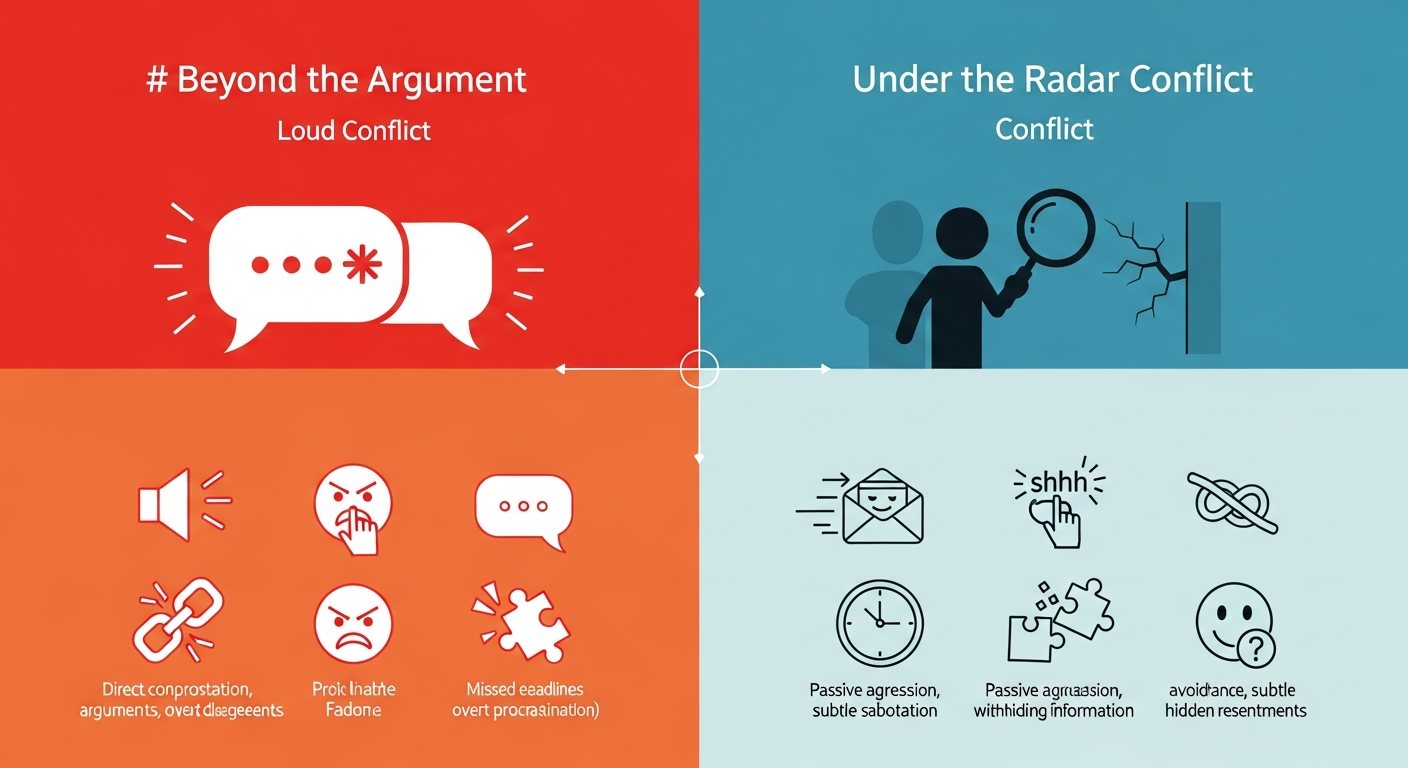
Nisu svi sukobi glasni. U mnogim okruženjima visokih performansi najštetniji sukobi ne uključuju vikanje ili treskanje vratima; umjesto toga, skrivaju se u propuštenim rokovima, sarkazmu u chat-nitima ili sastancima na kojima nitko ne dovodi u pitanje očito manjkavu ideju. Učinkovito rješavanje sukoba Počinje mnogo prije nego što izbije žestoka svađa — započinje sposobnošću da se osjete suptilne promjene u dinamici tima koje signaliziraju skrivenu napetost.
Ovaj vodič pokazuje kako rano prepoznati skriveni sukob — i kako rješavanje sukoba, utemeljeno na emocionalnoj inteligenciji (EQ), sprječava otuđenje prije nego što ono postane mjerljiv teret za vašu profitabilnost. Prelaskom s reaktivnog načina razmišljanja “gašenja požara” na proaktivnu kulturnu strategiju, organizacije mogu potencijalne poremećaje pretvoriti u prilike za inovacije i dublju psihološku sigurnost.
Zašto skriveni sukobi na radnom mjestu koštaju više od otvorenih neslaganja?
Otvoreni nesporazumi su vidljivi i obično se rješavaju jer zahtijevaju neposrednu pažnju. Međutim, skriveni sukob—koji se odlikuje pasivno-agresivnim ponašanjem, izbjegavanjem i tihim otporom—s vremenom nagriza povjerenje i učinkovitost poput sporog virusa. Tvrtka Myers-Briggs “Konflikt na poslu” Istraživanja pokazuju prosječno 4,34 sata tjedno provedenih na rješavanje sukoba na radnom mjestu.
Simptomi često izgledaju kao uobičajena užurbanost: smanjeni međufunkcionalni odgovori, izbjegavanje zakazivanja sastanaka i padovi u učinku bez jasnih temeljnih uzroka. Ako se ne riješe, ti obrasci potiču otuđenje i tiho odustajanje, povećavaju fluktuaciju i smanjuju zadovoljstvo kupaca. Kada rješavanje sukoba Kad je odsutan, psihološki teret na zaposlenike dovodi do problema “kognitivnog opterećenja”, pri čemu članovi tima troše više energije na snalaženje u političkim igrama nego na obavljanje svojih stvarnih poslova.
Ogroman trošak odustajanja i izbjegavanja sukoba
Neangažiranost je skupa. Gallupovo izvješće State of the Global Workplace za 2023. ističe da niska razina angažiranosti globalno gospodarstvo košta približno 8,8 bilijuna dolara u izgubljenoj produktivnosti. Taj nedostatak angažiranosti često je izravan nusprodukt neriješenih napetosti. Kada se ljudi povuku, rješavanje sukoba Postaje znatno teže jer je manje ljudi spremno na vrijeme iznijeti probleme na vidjelo kako bi ih riješili. Referenca: Gallup radno mjesto.
Štoviše, studija tvrtke CPP Inc. (sada The Myers-Briggs Company) otkrila je da američki zaposlenici provode 2,8 sata tjedno rješavajući sukobe, što iznosi otprilike $359 milijardi plaćenih sati. U hibridnom svijetu ovaj se “skriveni” trošak pojačava jer se gube fizički znakovi, što digitalne rješavanje sukoba vještine su obavezni zahtjev za suvremeno vodstvo.
Kako rano prepoznati pasivno-agresivno ponašanje na poslu
Rano otkrivanje je kamen temeljac učinkovite rješavanje sukoba. Vođe bi trebale tražiti ove suptilne crvene zastavice:
- Uzorani zastoji: Ponovljeni zahtjevi u zadnji čas za promjenu opsega ili “zaboravljene” zadatke koji posebno utječu na jednog kolegu ili odjel.
- Performativni sporazum: Članovi tima na sastancima kažu “zvuči dobro” ili “pridružujem se”, a zatim privatno blokiraju ili ignoriraju odluke u fazi provedbe.
- Informacijsko ograničavanje: Izostavljanje konteksta, “zaboravljanje” stavljanja u kopiju ključnih dionika ili isključivanje određenih kolega iz ključnih Slack ili Teams kanala.
- Mikro-sarkazam: Korištenje “samo se šalim” kao štita za potkopavanje kolega u javnim digitalnim nitima ili tijekom video poziva.
- Izbjegavanje eskalacije: Namjerno usmjeravanje problema na određenog kolegu umjesto da se izravno s njim rješava zastoj u procesu.
Je li vaša timska kultura spremna za rješavanje sukoba?
Prije nego što se može provesti bilo kakva formalna medijacija, okruženje je mora podržavati. Bez temelja psihološke sigurnosti, zaposlenici će odabrati “put najmanjeg otpora” – što je obično šutnja. Razumijevanje nijansi dinamike tima je ključno, kako je detaljno opisano u Naš vodič za psihološku sigurnost.
Psihološka sigurnost: vodeći pokazatelj zdravih timova
Timovi s visokom psihološkom sigurnošću ranije uočavaju probleme i brže ih rješavaju. Googleov projekt Aristotle, opsežna studija učinkovitosti timova, utvrdio je psihološku sigurnost kao najvažniji čimbenik u timovima visokih performansi. Kad ljudi vjeruju da mogu slobodno izraziti svoje mišljenje bez kazne ili poniženja, slobodnije doprinose idejama i preuzimaju rizike—što je temelj rješavanje sukoba. Referenca: Google Re:Work.
Kako vođe mogu pretvoriti tihi sukob u konstruktivno rješavanje konflikta?
Vođe mogu smanjiti rizik rješavanje sukoba Čineći povratne informacije poučivima, sigurnima i mjerljivima. To zahtijeva pomak od “godišnjih ocjena” prema trenutačnom koučingu emocionalne inteligencije (EQ). Kombiniranjem treninga EQ-a, okvira za povratne informacije i rituala sigurnosti razgovori postaju brži, ljubazniji i jasniji—a odgovornost se pritom ne gubi.
EQ obuka za zaposlenike: pristup usmjeren na vještine
Emocionalna inteligencija nije “meka” vještina; ona je tehnički zahtjev za suvremeno upravljanje. Provedba programa obuke usmjerenog na EQ prvi je korak prema smanjenju toksičnosti na radnom mjestu. Ključne komponente uključuju:
- Vježbe samosvijesti: Pomoć zaposlenicima da prepoznaju osobne okidače, tjelesne signale (poput ubrzanog otkucaja srca) i svoje uobičajene stilove rješavanja sukoba (izbjegavanje, natjecanje ili suradnja).
- Označavanje emocija: Jednostavno imenovanje emocije — ”Osjećam se frustrirano zbog ovog roka” — smanjuje uzbuđenje amigdale i otvara kognitivne mogućnosti za rješavanje problema. Pročitajte više ovdje.
- Reprezentacije perspektive: Vježbajte “steel-manning” (suprotno od "straw-manninga") tuđe stavove kako biste smanjili obrambene spirale tijekom rješavanje sukoba.
- Taktike popravka: Obuka timova za priznavanje utjecaja bez obzira na namjeru, razjašnjavanje budućih potreba i predlaganje konkretnih sljedećih koraka.
Radikalna iskrenost: ljubazna, ali jasna povratna informacija koja se može primijeniti u velikoj mjeri
Kako bi izbjegle “razarajuću empatiju” (biti toliko ljubazan da ne pomažete ljudima da rastu) ili “odvratnu agresiju”, organizacije bi trebale usvojiti zajednički jezik za davanje povratnih informacija. Okvir radikalne iskrenosti Kim Scott—osobno brinuti, a izravno izazivati—pruža mentalnu kartu za rješavanje sukoba. Kada svi koriste istu terminologiju, “oštrina” povratne informacije nestaje jer se ona shvaća kao alat za zajednički rast, a ne kao osobni napad.
Koji psihološki rituali sigurnosti čine iskrenost rutinskom?
Ne možete čekati krizu da biste vježbali. rješavanje sukoba. To mora biti ugrađeno u tjedni ritam poslovanja. Prema Mekinzija, Organizacije koje daju prioritet “mikro-navikama” komunikacije primjećuju značajan porast agilnosti i zadržavanja zaposlenika.
- Crveni/žuti/zeleni check-inovi: Započnite sastanke ocjenjivanjem individualnih razina napetosti. To normalizira činjenicu da nismo uvijek na 100% i čini sigurno imenovati stres.
- Runde rizika: Svaka osoba ističe najrizičniju pretpostavku koju ove sedmice postavlja. To otkriva skrivene nesuglasice prije nego što postanu neuspjeh projekta.
- Trenuci neslaganja i predanosti: Zabilježite neslaganje u zapisniku sastanka, donesite odluku i zatim krenite naprijed kao jedinstveni front.
- Post-mortem analize bez okrivljavanja: Usredotočite se isključivo na kvarove sustava i praznine u procesima umjesto da tražite “krivca.”
Kako vam Smart Arena pomaže u izgradnji timova otpornih na sukobe u velikom opsegu?
Smart Arena kombinira AI-om pokretan alat za izradu tečajeva (CourslyAI) s LMS-om poslovne razine kako bi isporučila rješavanje sukoba i brzo, dosljedno i u velikoj mjeri strukturirajte EQ programe—na više lokacija i jezika. Za dublji uvid u to kako strukturirati ove programe, pogledajte Naš vodič za odabir pravog LMS-a.
- Brzo stvaranje sadržaja uz pomoć umjetne inteligencije: Pretvorite svoje postojeće HR politike, PDF-ove ili jedinstvene radne scenarije u EQ temeljen na ulogama i rješavanje sukoba mikrokursovi u minutama.
- Vježba scenarija: Izradite razgranate razgovore za suočavanje s pasivno-agresivnim ponašanjem, pružajući korisnicima trenutačnu povratnu informaciju o njihovim komunikacijskim odabirima.
- Višejezična isporuka: Lokalizirajte EQ obuku za zaposlenike u svim globalnim uredima odmah, osiguravajući da se poštuju kulturne nijanse u rješavanje sukoba obuka.
- Analitika spremna za reviziju: Mjerite doseg programa, stope završetka i signale promjene ponašanja (npr. promjene u pulsnim anketama o povjerenju u tim).
Ključne poruke za HR i L&D voditelje
- Tihi sukob je tihi ubojica produktivnosti; morate ga rano izmjeriti i otkriti.
- Vještine emocionalne inteligencije i rituali psihološke sigurnosti čine rješavanje sukoba skalabilna navika.
- Alati pokretani umjetnom inteligencijom poput CourslyAI-a omogućuju vam personalizaciju scenarija obuke prema specifičnoj kulturi vaše tvrtke.
Mini okvir: signali naspram intervencija
| Znak skrivenog sukoba | Što to znači | Intervencija |
|---|---|---|
| Ponavljane promjene u zadnji čas | Izbjegavanje ranog neslaganja | Koristite pre-morteme i crveno/žuto/zelene provjere. |
| Šutnja na sastancima za donošenje odluka | Niska sigurnost ili nejasne uloge | Runde rizika + ritual neslaganja i obveze |
| Sarkazam u chat nitima | Frustracija pod maskom | EQ označavanje + skripte za popravak 1:1 |
| Zaobilazna rješenja za suradnika | Prekid veze | Predložak za medijaciju + izjave o granicama |
Često postavljana pitanja (FAQs)
Kako mogu prepoznati pasivno-agresivno ponašanje na poslu prije nego što eskalira?
Pratite obrasce ponašanja poput ponovljenih kašnjenja, ograničavanja pristupa informacijama i sarkastičnih digresija. Kad ta ponašanja postanu “prepoznatljiv znak” određenog člana tima ili projektne grupe, to je signal da rješavanje sukoba potrebno je riješiti temeljne frustracije.
Koji je najbrži način pokretanja EQ obuke za zaposlenike?
Korištenje LMS-a pokretanog umjetnom inteligencijom poput Smart Arena omogućuje vam pretvaranje postojećih kulturnih dokumenata u interaktivne mikro-kurseve. Ovo učenje temeljeno na scenariju znatno je učinkovitije za rješavanje sukoba nego statični video predavanja.
Kako psihološka sigurnost smanjuje “tihi odlazak”?
Tiho odustajanje često je obrambena reakcija na neriješene napetosti na radnom mjestu. Kad se zaposlenici osjećaju sigurno da se uključe u rješavanje sukoba, osjećaju se više posvećeni ishodu i manje je vjerojatno da će se povući iz svojih uloga.
Koje metrike bi HR trebao pratiti kako bi dokazao utjecaj rješavanja sukoba?
Odjel za ljudske resurse trebao bi pratiti “vrijeme do donošenja odluke” (koliko dugo treba za usuglašavanje strategije), stope fluktuacije unutar određenih odjela i ocjene psihološke sigurnosti iz godišnjih ili tromjesečnih kratkih anketa.
Zaključak: Pretvaranje trenja u rast
Konflikt na radnom mjestu je neizbježan, ali njegov negativan utjecaj nije. Prelaskom iznad same rasprave i prepoznavanjem tihih signala napetosti, voditelji učenja i razvoja mogu izgraditi kulturu u kojoj rješavanje sukoba je konkurentska prednost, a ne obaveza. Ovaj tjedan pokušajte u svoj sastanak vodstva dodati “Krug rizika” ili svom menadžerskom timu podučiti jednu “Repair Script”. Mali, namjerni koraci nakupljaju se u kulturu transparentnosti i visokih performansi.