Evropsko okolje na področju znanosti o življenju doživlja največjo preobrazbo v zadnjih dveh desetletjih. Medtem ko Evropska komisija posodablja farmacevtska pravila in upravljanje digitalnega zdravja, se Farmacevtska uredba EU 2027 rok je postal glavna osrednja točka za uradnike za skladnost, vodje L&D in vodje operacij. Cilj te spremembe zakonodaje je ustvariti bolj odporno, dostopno in inovativno zdravstveno okolje v državah članicah, vendar zahteva popoln premislek o tem, kako ekipe ravnajo s podatki, dokumentacijo in usposabljanjem.
Priprava ni več neobvezna, temveč je strateško nujna za zagotovitev dostopa do trga in varnosti bolnikov. Po podatkih McKinseyjevo poročilo o evropskem farmacevtskem sektorju, bo sposobnost prilagajanja spreminjajočim se regulativnim okvirom ključna razlika za podjetja, ki želijo ohraniti konkurenčno prednost. Tukaj je praktičen načrt, kako se pripraviti na regulativna pravila s pravim usposabljanjem, dokumentacijo in sistemi, da bodo vaše ekipe uspešno opravile revizije, delovale hitreje in poskrbele za varnost bolnikov.
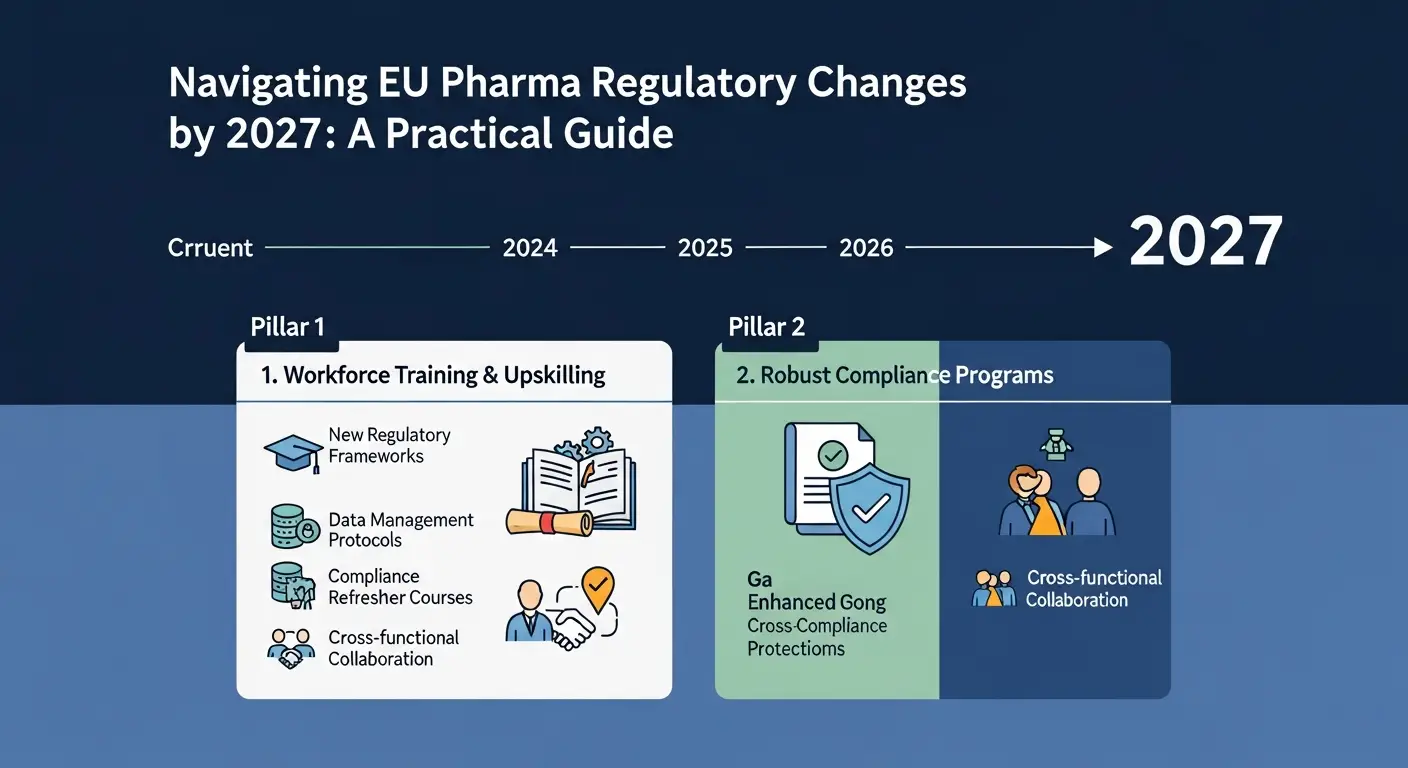
Katere spremembe farmacevtske zakonodaje EU naj podjetja pričakujejo do leta 2027?
Predlagana prenova splošne farmacevtske zakonodaje EU pomeni preobrat v smeri osredotočenosti na pacienta in preglednosti dobavne verige. V obdobju 2025-2027 EU pripravlja sveženj, ki spreminja pravila o zdravilih in uporabi podatkov. Te spremembe so namenjene reševanju “neizpolnjenih zdravstvenih potreb” evropskih državljanov, hkrati pa racionalizirajo postopek odobritve inovativnih terapij.
Ključni tokovi, ki jih je treba spremljati v okviru Farmacevtska uredba EU 2027 načrt vključuje:
- Reforma farmacevtske zakonodaje: Posodobljena pravila za izboljšanje dostopa, odpravo pomanjkanja zdravil ter posodobitev regulativnih postopkov in farmakovigilance. Za področje uporabe in cilje glej Farmacevtsko strategijo Evropske komisije za Evropo: uradni pregled.
- Evropski prostor zdravstvenih podatkov (EHDS): Nov okvir, ki omogoča varno primarno in sekundarno uporabo zdravstvenih podatkov. To zahteva stroge obveznosti glede kakovosti podatkov, interoperabilnosti, beleženja in nadzora dostopa. Strokovnjaki iz panoge PwC predlaga da bi lahko EHDS v desetih letih z boljšo učinkovitostjo podatkov EU prihranila več kot 11 milijard evrov. Več informacij: Stran EU EHDS.
- Okrepljena pričakovanja GxP: Usposabljanje in dokumentiranje ostajata osrednjega pomena v okviru dobre klinične prakse (GCP), dobre proizvodne prakse (GMP) in dobre distribucijske prakse (GDP). Glej smernice EMA: GCP, GMPin BDP.
V praksi to pomeni, da se bodo do leta 2027 okrepila pričakovanja glede regulativna pripravljenost. To vključuje dokazljivo usposobljenost, dosledno usposabljanje SOP, sledljivo dokumentacijo in dokazila, pripravljena za revizijo na vseh lokacijah in pri tretjih partnerjih. Organizacije morajo preiti od usposabljanja po načelu “preveri-odključi” h kulturi stalne skladnosti.
Pregledna področja vpliva Uredbe EU o farmacevtskih izdelkih 2027
| Območje | Katere spremembe | Kaj pripraviti |
|---|---|---|
| Pismenost na področju umetne inteligence (obvezno) | Člen. 4 Zakona o umetni inteligenci: Vse osebje, ki uporablja ali zagotavlja umetno inteligenco, mora od začetka leta 2025 dokazati “znanje o umetni inteligenci”. | Certificirajte vse osebje o etiki umetne inteligence, pristranskosti podatkov in politikah uporabe umetne inteligence, specifičnih za podjetje. |
| Sistemi umetne inteligence z visokim tveganjem | Priloga III / Prehod MDR: UI, ki se uporablja v diagnostiki ali kliničnih preskušanjih, je “visoko tvegana”.” | Dokumentirajte nadzor, ki ga izvaja človek v zanki; usposabljajte za ročno razveljavljanje in poročanje o tveganjih. |
| Interoperabilnost EHDS | Uredba (EU) 2025/327: strogo označevanje in beleženje za dostop do primarnih zdravstvenih podatkov. | Nadgradnja standardov SNOMED CT in HL7 FHIR; beleženje vseh poskusov dostopa do sekundarnih podatkov. |
| GMP in AI (Priloga 22) | Priloga 22 agencije EMA: omejuje generativno umetno inteligenco pri odločitvah o kritičnih serijah; zahteva fiksne modele. | Usposabljanje skupin za kakovost o razliki med “fiksnimi” in “nenehno učečimi se” modeli. |
Kako naj farmacevtske in zdravstvene ekipe posodobijo usposabljanje in dokumentacijo za farmacevtske predpise EU in EHDS?
Skladnost se premika s hitrostjo vaših dokazov o usposabljanju. Ko Farmacevtska uredba EU 2027 bodo regulativni organi pričakovali aktualno usposabljanje, ki bo ustrezalo njihovim vlogam in bo natančno povezano s standardnimi operativnimi postopki (SOP) in digitalnimi sistemi. A čista dokazna sled dokazovanje, kdo se je česa naučil, kdaj in kako je bila preverjena usposobljenost, ni več luksuz - to je osnovni pogoj za zakonito delovanje.
Če želite zagotoviti, da bo vaša organizacija ostala skladna s predpisi, upoštevajte ta strukturiran pristop k posodabljanju strategije L&D:
- Prikažite predpise in vloge: Preoblikovanje uredbe EU o farmacevtskih izdelkih 2027 in zahtev EHDS v matriko vlog, SOP in kompetenc. To bi moralo zajemati ne le notranje zaposlene, temveč tudi prodajalce in organizacije za klinične raziskave (CRO).
- Posodobitev učnih načrtov: Odstopite od dolgih, statičnih modulov usposabljanja. Za posodobitve SOP uporabljajte mikroučenje, za kritične kontrole interaktivne simulacije, za zasebnost podatkov in obravnavo primerov farmakovigilance (PV) pa module, ki temeljijo na scenarijih. Za več informacij o posodobitvi svojega pristopa si oglejte naš vodnik o pravem pomenu usposabljanja o skladnosti.
- Standardizacija ocenjevanja: Izvedite objektivno preverjanje znanja in podpisovanje opazovane prakse. Ponavljajoče se osvežitve so bistvenega pomena pri nalogah z visokim tveganjem, kot so predaja hladilne verige in zapleteni izvlečki podatkov.
- Različica in potrditev: Vsak tečaj povežite z določeno različico SOP/dokumenta. Zajemanje potrdil o elektronskem podpisu, ki so skladna s standardi EU, in njihovo varno shranjevanje skupaj z zapisi tečajev.
- Avtomatiziranje ponovnih certificiranj: Ročno sledenje je glavno revizijsko tveganje. Uporabite sistem LMS za sprožitev opomnikov o poteku veljavnosti certifikata, obvestil o nadzoru sprememb ali korektivnih in preventivnih ukrepih (CAPA).
- Centralizirajte dokaze: Evidenco o dokončanju, poskusih, rezultatih in potrditvah nadzornika hranite v enem samem, potrjenem sistemu. To vaši ekipi omogoča, da na zahtevo izvozi poročila, pripravljena za revizorja, med nepričakovanim pregledom.
Kontrolni seznam skladnosti za regulativno pripravljenost za leto 2027
| Zahteva | Dokaz | Lastnik |
|---|---|---|
| Dodelitev na podlagi vlog | Matrika, ki povezuje vloge → SOP → tečaji | QA / L&D |
| Različica SOP | Sklicevanja na različice tečaja in SPO | QA / nadzor dokumentov |
| Potrjevanje kompetenc | Ocene, potrditve OJT, simulacije | Linijski vodje |
| Kadenca ponovnega certificiranja | Avtomatiziran urnik + dnevniki s časovnim žigom | Administrator L&D |
| Revizijsko poročanje | Poročila, ki jih je mogoče izvoziti in so razvidna iz nedovoljenih posegov | Uradnik za skladnost |
Kako sistem LMS za zagotavljanje skladnosti pomaga pri pripravljenosti na predpise, revizijskih sledovih in usposabljanju za zagotavljanje farmacevtske skladnosti?
Namensko zgrajen skladnost LMS spreminja politiko v prakso in prakso v dokaz. Po mnenju Gartnerjeva raziskava, organizacije, ki uporabljajo avtomatizirano tehnologijo za zagotavljanje skladnosti, zmanjšajo upravno breme do 30%, hkrati pa znatno zmanjšajo tveganje za predpisane globe. Tukaj je opisano, kako Smart Arena podpira vašo Farmacevtska uredba EU 2027 potovanje:
- Avtomatizirane naloge: Vloge prikažite z učnimi načrti, povezanimi s SOP; samodejno vključite osebje ob zaposlitvi, spremembi vloge ali posodobitvah SOP. To zagotavlja, da med hitrimi organizacijskimi spremembami nihče ne bo ostal brez dela.
- zapisi, ki so pripravljeni na revizijo: Smart Arena zagotavlja dnevnike, ki jih je mogoče prikrojiti, e-podpise, časovno označene zaključke in celotno zgodovino različic vseh gradiv za usposabljanje.
- Usposobljenost v obsegu: Presežite stopnjo dokončanja. Za dokazovanje dejanskega pridobivanja spretnosti uporabljajte preverjanje znanja, potrjevanje opazovane prakse in redna ponovna certificiranja.
- Večjezični in mobilni dostop: Z lokalizirano vsebino dosezite osebje za premestitev in globalne podružnice. Naš mobilni dostop, ki je prijazen brez povezave, zagotavlja, da lahko delavci v proizvodnji ali na terenu ostanejo v skladu z zakonodajo, ne da bi potrebovali namizni računalnik.
- Integracije: Povežite svoj HRIS za nemoteno sinhronizacijo uporabnikov in uporabite enotno prijavo (SSO) za varen dostop. Naša platforma je zasnovana tako, da se integrira z vašim obstoječim tehnološkim sklopom, kar olajša upravljanje podatkov med oddelki.
- ustvarjanje tečajev na podlagi umetne inteligence (CourslyAI): V nekaj minutah spremenite zapletene SOP, PDF-je ali diapozitive v potrjeno mikroučenje z vgrajenimi preverjanji. To je ključnega pomena za sledenje hitremu tempu sprememb na področju Farmacevtska uredba EU 2027 okvir.
Preberite: Kakšna je razlika med LMS in LXP?
Priprava na evropski prostor zdravstvenih podatkov (EHDS) z učenjem
EHDS prinaša edinstvene izzive pri ravnanju s podatki. Če želite ostati v ospredju, morajo vaši programi usposabljanja vključevati:
- Vloge in odgovornosti za podatke: Jasno usposabljanje o upravljavcih in obdelovalcih podatkov, upravljanju soglasij in pravni podlagi za dostop do podatkov.
- Osnove interoperabilnosti: Izobraževanje tehničnih in poslovnih skupin o standardiziranih terminologijah (kot je SNOMED CT) in protokolih za kakovost podatkov.
- Obnašanje v okviru načrtovanja varnosti: Poleg tehnologije so največje tveganje ljudje. Izvajajte simulacije ribarjenja, prakse varnega izvoza in vaje za prenos incidenta.
- beleženje in sledljivost: Okrepitev zakaj popolna in pravočasna dokumentacija je pomembna za sekundarno uporabo zdravstvenih podatkov.
Katere strategije stalnega usposabljanja zagotavljajo skladnost farmacevtskih ekip do leta 2027 in pozneje?
Trajna skladnost je stalno učenje program in ne enkraten dogodek. Na spletni strani . Farmacevtska uredba EU 2027 pokrajina se bo še naprej razvijala, z njo pa se mora razvijati tudi vaše usposabljanje. Raziskave, ki jih je opravil Združenje za razvoj talentov (ATD) poudarja, da imajo podjetja z “visoko zmogljivo kulturo učenja” večjo verjetnost, da bodo uspešno krmarila po regulativnih spremembah.
Uporabljajte takt, ki predvideva spremembe in zgodaj odpravlja vrzeli v znanju:
- Četrtletne mikroaktualizacije SOP: Namesto da čakate na letno osvežitev, objavite kratke module, ki pojasnjujejo, kaj se je spremenilo in zakaj. Za te posodobitve zahtevajte takojšnje potrjevanje.
- Osvežitve na podlagi tveganja: Povečajte pogostost usposabljanj za procese z visokim tveganjem, kot so logistika hladne verige, izvoz podatkov ali protokoli za vpis v klinično preskušanje.
- Pomoč ob pravem času: Kontrolne sezname in kratke videoposnetke z navodili vgradite neposredno v potek dela. Te vire povežite s sistemom LMS, da bodo dostopni, ko jih bo zaposleni najbolj potreboval.
- telemetrija veščin: Spremljajte trende ocenjevanja v svoji organizaciji. Če ima določena skupina stalno težave pri določenem preverjanju znanja, lahko zagotovite ciljno usmerjeno usposabljanje, preden to postane revizijska ugotovitev.
- Sprožilci za nadzor sprememb: Zagotovite, da vsak ukrep CAPA ali odstopanje samodejno sproži ciljno preusposabljanje vpletenega osebja z dokumentiranim dokazilom o zaključku.
Strokovni nasvet: Vsako revizijo SOP povežite z učno potjo, ki jo sproži LMS. To odpravlja ročno iskanje podpisov in zagotavlja skladnost s standardom 100% v celotni organizaciji. Za več informacij o uporabi tehnologije si oglejte naš članek o Umetna inteligenca pri učenju in razvoju.
“Do leta 2027 morajo vsi oddelki dokazati usposabljanje, ki temelji na vlogah in je prilagojeno trenutnim različicam SOP. To vključuje avtomatizirane urnike ponovnega certificiranja, potrjevanje usposobljenosti z ocenami in dnevnike, pripravljene za revizijo, za ravnanje s podatki, usklajenimi z EHDS. Za dodeljevanje, sledenje in poročanje o učenju na vseh lokacijah bomo uporabljali aplikacijo Smart Arena. Vse revizije SOP morajo biti opremljene z modulom mikroučenja in potrdilom z e-podpisom v sistemu LMS.”
Kako Smart Arena izstopa pri zagotavljanju skladnosti s predpisi na področju farmacije
Medtem ko številni ponudniki sistemov LMS ponujajo splošna orodja za usposabljanje, farmacevtska industrija zahteva posebne, preverjene funkcije za izpolnjevanje Farmacevtska uredba EU 2027 standardi.
- Revizija po zasnovi: Za razliko od splošnih platform Smart Arena vključuje dnevnike, ki jih je mogoče prikrojiti, in povezavo različic SOP kot ključne funkcije in ne kot naknadne funkcije.
- CourslyAI za regulirano vsebino: Naša umetna inteligenca ne ustvarja le vsebine, temveč tudi potrjena mikroučenje na podlagi vaših lastnih SOP, kar zagotavlja natančnost in skladnost z zakonodajo.
- Delovni tokovi za pripravljenost na predpise: Avtomatizirajte celoten življenjski cikel zagotavljanja skladnosti, od začetnega uvajanja do prekvalifikacije, ki jo sproži CAPA.
- Skalabilnost za podjetja: Zasnovan za globalne organizacije z več lokacijami, ki podpirajo večjezično zagotavljanje in zapletene integracije HRIS/SSO.
Pogosta vprašanja
Kakšen je najhitrejši način za uskladitev usposabljanja s farmacevtsko uredbo EU 2027?
Najhitrejši način je, da sestavite matriko vloga-SOP-kurz. Uporabite generator tečajev z umetno inteligenco, kot je CourslyAI, za hitro pretvorbo obstoječih SOP v module mikroučenja, nato pa uveljavite potrdila z e-podpisom in urnike ponovnega certificiranja v validiranem sistemu LMS za zagotavljanje skladnosti.
Kako sistem LMS za zagotavljanje skladnosti podpira zahteve EHDS?
Centralizira vsa usposabljanja o zasebnosti in varnosti, beleži vsak zaključek s časovnim žigom, uveljavlja učne poti, ki temeljijo na dostopu, in pripravlja revizijska dokazila o usposobljenosti za ravnanje s podatki, ki jih zahtevajo novi predpisi o prostoru za zdravstvene podatke.
Ali lahko spremljamo usposabljanje za izmenske delavce brez službene e-pošte?
Da, Smart Arena podpira prijave s kioska ali skupne naprave ter mobilnim napravam prijazne module. Usposabljanje lahko dodeljujete prek ID-jev HRIS in zajemate potrdila z e-podpisom, ne da bi za to potrebovali osebni e-poštni naslov podjetja.
Kako pogosto moramo osveževati usposabljanje GMP/GDP/GCP?
Najboljši je pristop, ki temelji na tveganju. Za vloge z visokim tveganjem priporočamo vsaj letno osvežitev in takojšnje prekvalifikacije ob vsaki spremembi SOP ali po regulativnem odstopanju ali incidentu CAPA.
Kolikšna je donosnost naložbe pri uvajanju sistema LMS za skladnost s farmacevtskimi predpisi EU?
Donosnost naložbe vključuje drastično zmanjšanje časa za pripravo revizije (pogosto več kot 40%), manj regulativnih odstopanj, hitrejše uvajanje novih zaposlenih in bistveno nižje upravne stroške zaradi avtomatiziranih nalog in poročil.
Ste pripravljeni na farmacevtsko uredbo EU 2027?
Uspeh v novi regulativni dobi bo naklonjen ekipam, ki bodo politiko spremenile v prakso in nato v dokazljivo pristojnost. Kot Farmacevtska uredba EU 2027 rok se bliža, se čas za posodobitev infrastrukture za usposabljanje izteka. Z uskladitvijo vlog s SOP, izkoriščanjem umetne inteligence za hitro ustvarjanje vsebin in avtomatizacijo revizijskih sledi lahko skladnost iz bremena spremenite v konkurenčno prednost.
Smart Arena z ustvarjanjem tečajev s pomočjo umetne inteligence in sistemom LMS za skladnost v podjetjih je zasnovana tako, da vam pomaga doseči to - hitreje, varneje in vedno pripravljena na revizijo. Ne čakajte na naslednji inšpekcijski pregled, da boste odkrili svoje pomanjkljivosti.