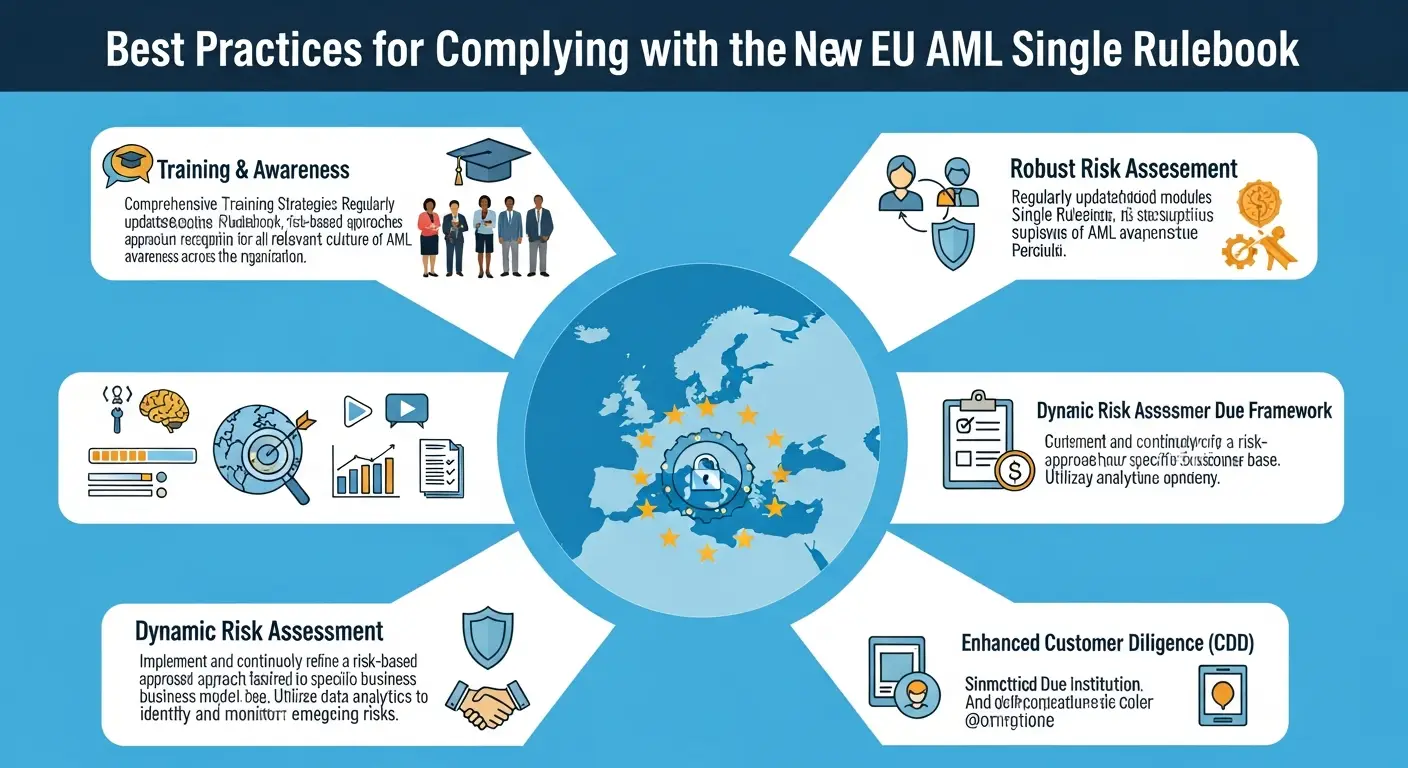
Ko regulatorji EU dokončajo usklajen okvir za preprečevanje pranja denarja, se podjetja soočajo z novo realnostjo delovanja: doslednimi pravili, višjimi pričakovanji in strožjim nadzorom. Krmarjenje po spletni strani Skladnost z enotnim pravilnikom EU o preprečevanju pranja denarja ni več le zakonska obveznost, temveč strateški imperativ za organizacije, ki želijo ohraniti zaupanje v vse bolj nadzorovanem finančnem okolju. Ta vodnik pojasnjuje, kako zagotoviti skladnost z jasnimi obveznostmi usposabljanja, kontrolami na podlagi tveganja, poročanjem in pripravljenostjo na revizijo - vse to s pomočjo sodobnih digitalnih učnih platform.
V današnjem regulativnem okolju so stroški neizpolnjevanja predpisov zelo visoki, saj se globalne finančne institucije vsako leto soočajo z milijardami kazni. Po podatkih Najnovejše poročilo družbe Deloitte o trendih na področju pranja denarja, prehod na centraliziran evropski organ pomeni “seizmično spremembo” v tem, kako morajo podjetja dokumentirati svoje notranje kontrole in usposobljenost osebja. Prehod na ta novi okvir zahteva premik od statičnega usposabljanja, ki se izvaja enkrat letno, k nenehni kulturi učenja, ki temelji na podatkih.
Preberite več: Kaj je skladnost podjetja?
Katere so ključne zahteve enotnega pravilnika EU o preprečevanju pranja denarja in zakaj so zdaj pomembne?
Cilj enotnega pravilnika EU o preprečevanju pranja denarja je uskladiti obveznosti preprečevanja pranja denarja in financiranja terorizma v državah članicah, odpraviti razdrobljenost in omogočiti dosleden nadzor. Pred tem so direktive EU dopuščale precejšnje nacionalne razlike, kar je ustvarjalo “regulativno arbitražo” in šibke vezi v finančnem sistemu. V skladu z novim pravilnikom neposredni predpisi zagotavljajo, da banka v Madridu upošteva popolnoma enake standarde kot fintech v Berlinu.
Temeljni stebri novega usklajenega okvira
Organizacije morajo pričakovati: (1) podrobne standarde skrbnega preverjanja strank (CDD/KYC); (2) strožje preverjanje dejanskega lastništva; (3) izrecne zahteve glede pristopa na podlagi tveganja (RBA); (4) standardizirano vodenje evidenc in poročanje o sumljivih dejavnostih; (5) jasnejše zahteve glede usposabljanja in usposobljenosti ter (6) okrepljen nadzor prek novega organa EU za preprečevanje pranja denarja (AMLA). Te spremembe bodo skrajšale roke za doseganje skladnosti in povečale dokazno breme pri revizijah.
Zakaj je to pomembno: regulatorji in revizorji bodo zahtevali dokaze, da je osebje usposobljeno, da ocene tveganja spodbujajo kontrole ter da je poročanje točno, pravočasno in ponovljivo. Uskladitev pomeni manj prostora za lokalno razlago in več osredotočenosti na kakovost izvajanja. Nedavna raziskava Svetovna raziskava družbe PwC o gospodarskem kriminalu kaže, da imajo organizacije z integriranimi, tehnološko vodenimi programi skladnosti 2x večjo verjetnost, da bodo odkrile goljufije, preden bodo vplivale na poslovni izid.
- Referenca: Sveženj Evropske komisije o preprečevanju pranja denarja in financiranju terorizma
- Referenca: Smernice EBA o preprečevanju pranja denarja in financiranja terorizma ter smernice o dejavnikih tveganja
Kateri pogosti izzivi preprečujejo skladnost z enotnim pravilnikom EU o preprečevanju pranja denarja v velikih organizacijah?
Podjetja se pogosto spopadajo z razdrobljenim usposabljanjem in porazdelitvijo politik po državah. Če različne podružnice uporabljajo različna gradiva za usposabljanje, to ustvarja “silose skladnosti”. To pomanjkanje enotnosti je glavni cilj novega zakona o preprečevanju pranja denarja, katerega namen je poenotiti kakovost zaščite pred finančnim kriminalom v celotnem euroobmočju.
Trenja med operacijami in L&D
Ročno sledenje opravljenemu usposabljanju za preprečevanje pranja denarja - z uporabo preglednic ali potrdil po elektronski pošti - je še ena velika ovira. Ta metoda je nagnjena k človeškim napakam in ne zagotavlja preglednosti v realnem času, ki jo zahtevajo sodobni nadzorniki. Poleg tega je razumevanje tveganj med oddelki prve linije (front office), oddelki za poslovanje in oddelki za skladnost pogosto nedosledno. Če prva pisarna ne razume “zakaj” v ozadju KYC, kakovost podatkov trpi že pri izvoru.
Po podatkih Gartnerjevo poročilo o tveganju skladnosti, je “neučinkovito usposabljanje” navedeno kot tretje največje tveganje za pravne oddelke podjetij. Če je usposabljanje splošno ali ni lokalizirano, vodi do nizke stopnje zavzetosti. To je še posebej nevarno za skladnost z enotnim pravilnikom EU o preprečevanju pranja denarja, kjer regulator pričakuje posebno “obvladovanje” zapletenih tipologij, kot sta pranje kriptoaktivnih sredstev ali prepoznavanje navideznih podjetij.
- Operativni učinek: zamujeni roki, ponavljajoče se ugotovitve in globe zaradi neustreznih zapisov o usposabljanju ali šibke povezanosti s sistemom RBA.
- Vpliv na ljudi: nizka vključenost v obvezno usposabljanje za preprečevanje pranja denarja, če je vsebina splošna, vsebuje veliko besedila ali ni lokalizirana.
- Vpliv na podatke: nedosledni identifikatorji učencev v različnih sistemih, kar otežuje zbiranje dokazov za revizorje in regulatorje.
Kako naj organizacije oblikujejo program preprečevanja pranja denarja, ki temelji na tveganju in je skladen s Pravilnikom?
Svoj okvir za preprečevanje pranja denarja povežite s pristopom, ki temelji na tveganju, in pokažite sledljivost od ocene tveganja do nadzora, usposabljanja in poročanja. Da bi to dosegli, morata L&D in skladnost s predpisi delovati v tandemu. Raziščete lahko naš vodnik po umetni inteligenci v podjetniškem učenju in si oglejte, kako sodobna orodja premostijo vrzel med zapleteno politiko in razumljivim usposabljanjem zaposlenih.
- Opredelite tveganja do vlog. Povezati taksonomijo tveganj v podjetju (izdelki, geografske regije, kanali, segmenti strank) z izpostavljenostjo za posamezno vlogo. Blagajnik potrebuje drugačno usposabljanje kot strokovnjak za financiranje trgovine.
- Opredelite matrike kompetenc. Za vsako vlogo opredelite učne cilje, ki so v skladu z enotnim pravilnikom, kot so sprožilci okrepljene dolžne skrbnosti (EDD) in preverjanje dejanskega lastništva.
- Lokalizacija vsebine in jezikov. EU je večjezična. Zagotavljanje modulov v maternem jeziku delavca ni le vljudnostno, temveč zagotavlja “razumevanje”, ki ga revizorji iščejo.
- Merjenje obvladovanja. Presežite “čas, porabljen za diapozitiv”. Uporabite ocenjevanje na podlagi scenarijev in razvejane primere za oblikovanje uporabne presoje.
- Avtomatizacija dokazov. Centralizirajte zapise o usposabljanju in potrditve pravilnikov. Tu je mogoče funkcije LMS za podjetja postale bistvene za regulirane panoge.
Katere so najboljše prakse za usposabljanje zaposlenih o novem enotnem pravilniku EU o preprečevanju pranja denarja?
Usposabljanje za preprečevanje pranja denarja obravnavajte kot stalno zmogljivost in ne kot letno potrditveno polje. V letu 2024 Poročilo o učenju na delovnem mestu LinkedIn Learning poudarja, da je “skladnost” najpomembnejše področje, na katerem zaposleni želijo bolj zanimive in interaktivne vsebine. Statični dokumenti PDF ne zadoščajo več niti zaposlenim niti regulatorjem.
Kako lahko usposabljanje za preprečevanje pranja denarja naredimo relevantno in zanimivo?
Poti, ki temeljijo na vlogah, so temelj sodobne skladnosti. Namesto da bi vseh 10.000 zaposlenih prisilili v isti splošni modul, prilagodite učne načrte za KYC, plačila in enote z visokim tveganjem. Mikroizobraževalni sprinti - 5 do 8-minutni moduli o posameznih temah, kot je “Pregled sankcij” - omogočajo zaposlenim, da se učijo, ne da bi pri tem motili svoj osnovni delovni proces.
Pomembne so tudi simulacije scenarijev. Razvejani primeri, kot je vključitev kompleksne pravne osebe z večplastnim lastništvom v offshore jurisdikcijah, pomagajo oblikovati “preiskovalno miselnost”, ki jo zahteva enotni pravilnik.
Kakšne so obveznosti usposabljanja za zaposlene v skladu s pravilnikom?
- Obvezno uvajanje in vsakoletno osveževanje: Zahteva se za vse ustrezno osebje, vključno z začasnim osebjem in osebjem tretjih oseb.
- Okrepljeno usposabljanje: Poglobljeni moduli za funkcije z visokim tveganjem, kot so korespondenčno bančništvo ali izpostavljenost virtualnim sredstvom.
- Dokumentacija: Podrobni dnevniki učnih izidov, trajanja in metod izvedbe.
- Odgovornost: Vodje morajo biti opozorjeni na osebe, ki ne dokončajo študija, ali na osebe z nizkimi ocenami, da se začne sanacija.
Kako spremljati dokončanje usposabljanja za preprečevanje pranja denarja z dokazi, ki so primerni za revizijo?
O sistemu evidentiranja se ni mogoče pogajati. Kot enotni vir za zaključke in potrditve pravilnikov uporabite sistem LMS v podjetju. Zagotovite celovitost podatkov s sinhronizacijo identifikatorjev HRIS, da se izognete podvojenim zapisom. Nadzorne plošče v realnem času morajo uradnikom za skladnost zagotavljati pregled nad pripravljenostjo organizacije in samodejne opomnike za tiste, ki zaostajajo.
Preberite več: Kakšna je razlika med LMS in LXP
Kako dokazati skladnost z enotnim pravilnikom EU o preprečevanju pranja denarja med revizijami in regulativnimi pregledi?
Revizorji in nadzorniki bodo pričakovali standardizirane dokaze, ki jih je mogoče pridobiti. Zgradite na revizijo pripravljen ritem delovanja z naslednjimi artefakti in postopki.
| Evidenčni element | Kako je videti dobro | Kje živi |
|---|---|---|
| Katalog usposabljanja | Povezano s tveganji/vlogami; nadzorovana različica z lokaliziranimi različicami | Knjižnica vsebin LMS z metapodatki |
| Zapisi o dokončanju | Časovno zaznamovano, povezano z vlogami, z zgodovino rezultatov/izkušenj | Poročila LMS (ID-ji HRIS, povezani s SSO) |
| Zahvale politike | Letna potrdila, ki jim je mogoče slediti in jih izvoziti | Središče LMS/politično vozlišče |
| Veljavnost ocenjevanja | Banke postavk, načrtovanje, periodična psihometrija | Orodje LMS/ocenjevalno orodje |
| Zapisi o upravljanju | Zapisniki odbora za usposabljanje, kartiranje razmerja med tveganjem in usposabljanjem | Povezave GRC/SharePoint + LMS |
Kako digitalne učne platforme pospešujejo usposabljanje za preprečevanje pranja denarja in najboljše prakse skladnosti?
Sodobna učna platforma, ki jo poganja umetna inteligenca, operacionalizira Skladnost z enotnim pravilnikom EU o preprečevanju pranja denarja s centralizacijo usposabljanja in avtomatizacijo najbolj zamudnih delov postopka. V dobi umetne inteligence si ekipe za skladnost ne morejo več privoščiti večtedenskega čakanja na nove vsebine, ki jih morajo razviti zunanje agencije.
- Ustvarjanje tečajev s pomočjo umetne inteligence: Hitro pretvorite zapletene politike AML v module mikroučenja, ki temeljijo na vlogah.
- Avtomatizacija skladnosti: Sprožite samodejno vpisovanje na podlagi nazivov delovnih mest HRIS ali geografskih lokacij.
- Poročanje na revizijski ravni: Z enim klikom ustvarite pakete dokazil, ki natančno prikazujejo, katero različico pravilnika je zaposleni podpisal.
- Večjezična dostava: Samodejno zagotovite podnapise in prevode za raznoliko, čezmejno delovno silo.
- Mobilni načini in načini brez povezave: Doseganje zaposlenih v podružnicah, ki morda nimajo rednega dostopa do pisalne mize.
Kako Smart Arena pomaga ekipam pri zagotavljanju celovite skladnosti z enotnim pravilnikom EU o preprečevanju pranja denarja?
Smart Arena združuje sistem LMS za podjetja z Ustvarjanje vsebin z AI za hitro ustvarjanje vsebine - idealno za obsežno usposabljanje na področju pranja denarja. Podpira učne poti, ki temeljijo na vlogah, večjezično izvajanje, samodejne opomnike in izvozne revizijske pakete. Naša platforma odraža skalabilen pristop k učenju, ki ga poganja umetna inteligenca in je osredotočen na človeka.
- Od politike do prakse v nekaj urah: Naložite politike preprečevanja pranja denarja ali opomnike o tveganjih; s CourslyAI ustvarite mikroučenje, preverjanje znanja in certifikate.
- Dokazi brez pretiravanja: Standardizirane predloge potrdil, različicam prilagojena vsebina in časovno označeni zaključki poenostavijo revizije.
- Vgrajena zaroka: Scenariji, razvejanost in razpršene osvežitve izboljšajo ohranjanje znanja in zmanjšajo število ponovnih ugotovitev.
- Prilagajanje IT v podjetjih: SSO, sinhronizacija HRIS in integracije API zagotavljajo čiste zapise in hitrejše uvajanje.
Kako se Smart Arena razlikuje od drugih
Kaj poudarjajo tekmovalci: Nedavne vsebine vodilnih ponudnikov sistemov LMS poudarjajo pripovedi o učenju, usmerjenem v umetno inteligenco, praktične postopke in hiter čas doseganja vrednosti. Nekatere se osredotočajo na inteligenco veščin, interoperabilnost SCORM/xAPI in analitiko, ki temelji na donosnosti naložb - kar je dragoceno, vendar pogosto splošno namenjeno vsem področjem usposabljanja.
- Pametno razlikovanje arene za AML: Delovni tokovi za zagotavljanje skladnosti po zasnovi (samodejna vključitev na podlagi vlog, cikli preusposabljanja), večjezično ustvarjanje mikroučenja prek CourslyAI, poročanje na revizijski ravni s paketi dokazov, ki jih je mogoče izvoziti, in integracije HRIS/identitet, ustvarjene za regulirana podjetja.
- Zakaj je to pomembno: Skladnost z enotnim pravilnikom EU o preprečevanju pranja denarja zahteva dokazljive rezultate usposabljanja in dosledne dokaze. Smart Arena skrajšuje cikle ustvarjanja vsebine in utrjuje revizijsko sled - zmanjšuje operativno tveganje in administrativne napore.
Katere praktične naslednje korake morajo vodje za skladnost in kadrovske zadeve sprejeti v tem četrtletju?
- Potrdite področje uporabe in vloge: Opredelite vse skupine prebivalstva, ki so pomembne za preprečevanje pranja denarja (vključno z izvajalci), in jih prilagodite učnim načrtom, prilagojenim tveganjem.
- Osnovna vsebina: popis trenutnih modulov, politik in ocen AML; označite vrzeli v primerjavi z zahtevami enotnega pravilnika.
- Pilotno mikroučenje: Dve zelo tvegani temi pretvorite v mikromodule z razvejanimi scenariji; preverite vključenost in obvladovanje.
- Avtomatizacija vpisa/opominov: Uporabite atribute HRIS za samodejno dodeljevanje tečajev z roki za plačilo in eskalacijami.
- Dokazi Hardna: Standardizirajte predloge potrdil in revizijske izvozne podatke; vadite “dokazno vajo”.”
- Lokalizirajte v velikem obsegu: Omogočite večjezične podnapise/prevode in mobilno dostavo za delavce, ki ne delajo na delovnem mestu.
Povzetek, pripravljen za kopiranje (delite ga z zainteresiranimi stranmi)
Za izpolnjevanje skladnosti z enotnim pravilnikom EU o preprečevanju pranja denarja organizacije potrebujejo program usposabljanja, ki temelji na tveganju in je povezan s kompetencami za posamezno vlogo, nenehnim mikroučenjem in revizijskim poročanjem. Prednost dajte vpisu, integriranemu v HRIS, večjezični vsebini, ocenjevanju na podlagi scenarijev in standardiziranim paketom dokazil (zaključki, ocene, potrdila in nadzor različic). Sodoben sistem LMS z umetno inteligenco, kot je Smart Arena s CourslyAI, pospešuje ustvarjanje vsebin ter avtomatizira opomnike in izvoz - tako se poveča stopnja dokončanja, izboljša zadržanje in skrajša čas priprave na revizijo.
Pogosta vprašanja
Kaj enotni pravilnik EU o preprečevanju pranja denarja spreminja za usposabljanje zaposlenih na področju preprečevanja pranja denarja?
Usklajuje pričakovanja po vsej EU in zvišuje zahteve glede dokazovanja: učni načrti, ki temeljijo na vlogah, redne osvežitve in preverljivi dokazi (zaključki, ocene in potrdila o politiki) postanejo obvezni.
Kako pogosto moramo v skladu s predpisi EU o preprečevanju pranja denarja ponovno usposabljati osebje?
Vsaj enkrat na leto za vse ustrezno osebje, pri čemer se za funkcije z visokim tveganjem ali ob spremembah politik/tipologij izvajajo pogostejša mikroobveščanja.
Kako lahko spremljamo dokončanje usposabljanja za preprečevanje pranja denarja v več državah?
Uporabite sistem LMS za podjetja, ki je integriran s sistemom HRIS, za točne identitete, samodejne vpise, večjezične module in izvozna poročila o zaključku/certifikatih.
Katere metrike revizorjem dokazujejo učinkovitost usposabljanja za preprečevanje pranja denarja?
Stopnje dokončanja po vlogah, rezultati in poskusi ocenjevanja, dokončanje popravljanja, čas za dokončanje in dokazila o potrditvah politike, usklajenih z različicami vsebine.
Kakšna je vloga digitalnih učnih platform pri upravljanju tveganja pranja denarja?
Pristop, ki temelji na tveganjih, operacionalizirajo s preslikavo tveganj na vloge, avtomatizacijo vpisa/opominov, omogočanjem učenja po scenarijih in izdelavo izvoznih dokumentov, pripravljenih za revizijo.
Kako lahko začnemo in zmanjšamo tveganje skladnosti z enotnim pravilnikom EU o pranju denarja?
Začnite s pregledom vrzeli v primerjavi z enotnim pravilnikom, pretvorite dve zelo tvegani temi v mikroučenje, avtomatizirajte vpise in opomnike ter standardizirajte svoj paket dokazil. Zmožnosti ustvarjanja tečajev, ki jih poganja umetna inteligenca, in LMS podjetja Smart Arena vam pomagajo pri hitrem napredovanju - brez žrtvovanja revizijske strogosti. V svetu boja proti pranju denarja, ki je pod velikimi tveganji, “dovolj dobro” ni več možnost; nove evropske regulatorje bo zadovoljila le s podatki podprta in vlogam prilagojena strategija usposabljanja.
Naslednji korak: začetek 30-dnevnega pilotnega usposabljanja za preprečevanje pranja denarja, ki se osredotoča na poti, ki temeljijo na vlogah, večjezično izvajanje in revizijsko poročanje.